GHK-Cu
GHK-Cu is a naturally occurring peptide that is thought to promote hair and skin vitality by stimulating collagen synthesis, enhancing tissue regeneration, and improving local blood flow.



For women who lose their hair (and their self-esteem as a result), women’s hair loss medication has the potential to help slow hair loss, improve hair growth, and restore self-confidence. A health condition such as an autoimmune disorder or hormone imbalance, a stage of life like perimenopause, or a genetic inheritance can exacerbate women’s hair loss. In many cases, women’s hair loss medication can help minimize thinning hair and help prevent additional future hair loss.
In addition to health concerns and genetics, women with nutritional deficiencies or even those experiencing a high level of stress may notice their hair is shedding during showers or filling up the hairbrush faster than normal.
At Belmar Pharmacy, hair loss medication for women comes in a variety of formulations and dosages that can be customized for individual needs.
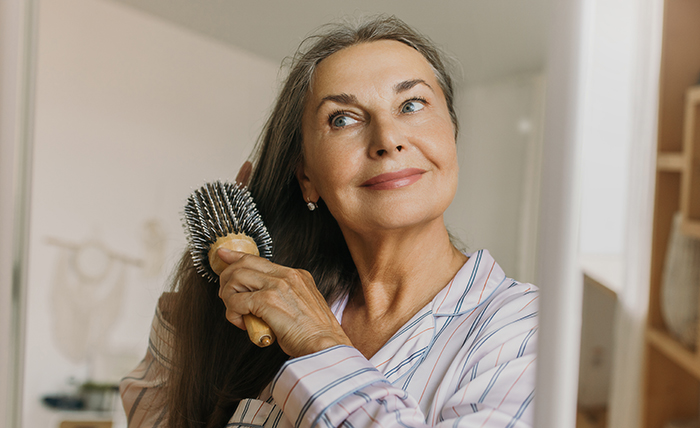
GHK-Cu is a naturally occurring peptide that is thought to promote hair and skin vitality by stimulating collagen synthesis, enhancing tissue regeneration, and improving local blood flow.
Finasteride blocks the conversion of testosterone to DHT to help prevent hair thinning, while minoxidil increases scalp blood flow to stimulate resting follicles into active growth.
Finasteride lowers DHT by inhibiting the type II 5‑alpha reductase enzyme, reducing a hormone linked to hair thinning, while biotin supports the processing of fatty acids, glucose, and amino acids.
Estradiol is the strongest and most active of the three primary estrogens and may have a role in supporting menstrual, bone, cardiovascular, and overall cellular health.
Belmar Pharmacy offers bioidentical micronized progesterone compounds. This hormone is crucial during the reproductive years and can benefit perimenopausal and postmenopausal women particularly in areas of endometrial protection, sleep, and mood.

There are numerous causes of hair loss in women, but the primary culprits typically fall into one of these categories:
Side effects of certain types of medications can lead to hair loss. Medications that cause hair loss often include those prescribed for depression, blood pressure, blood thinners, and high cholesterol. Birth control pills, some thyroid medications, and hormone therapies may also cause thinning hair or hair loss in women.
When a woman is losing more than 125 hairs per day, it may be a sign of alopecia. It is estimated that up to 30 million American women will experience hair loss at some point in their lives. Seeing a healthcare provider for hair loss itself, or when it is accompanied by other symptoms, such as skin rash, sudden excessive shedding, or other seemingly unrelated conditions, can help determine the underlying reasons for the hair loss. The medical term for hair loss is alopecia, and it is a real diagnosis.
Healthcare providers typically conduct a visual exam of the scalp and skin, discuss health history, any current medications, and any symptoms in order to diagnose hair loss in women. In some cases, a blood test can help determine vitamin and hormone levels to better understand if they are playing a role in hair loss.
Belmar Pharmacy compounds hair loss medication for women in both topical and oral formulations. Medication options for hair loss may include:
Finasteride can block the conversion of testosterone to dihydrotestosterone (DHT), a potent androgen. High levels of DHT in the scalp and serum can be associated with hair thinning and loss. However, finasteride should not be consumed or handled by women who are pregnant or of childbearing age, as exposure may cause birth defects in a developing fetus.
As a vasodilator, Minoxidil may accelerate hair growth by awakening hair follicles from a resting state into a growth phase. When combined with other hair health agents like finasteride/dutasteride and tretinoin, it has the potential for greater impact.
Tretinoin may improve cell turnover and promote a healthy scalp. When formulated with minoxidil, it may help the minoxidil penetrate tissues more thoroughly.
Latanoprost appears to stimulate hair follicles, but the mechanism isn’t fully understood. The medication mimics natural prostaglandin, which has been known to modulate hair growth.
Ketoconazole is an antifungal that can address dandruff and dermatitis by attacking fungi and yeast growth on scalp tissue.
Hormone levels fluctuate as women age, and imbalances can affect the hair cycle. Both estrogen and progesterone appear to have a protective effect. Estrogen support may limit dryness and thinning, and variations in progesterone may affect the pattern of hair growth.
Biotin (vitamin B7) can support hair and nail growth as well as skin health. Combined with finasteride, distinct mechanisms of action work together to fight hair loss.
Each works in a unique way to help promote new hair growth and/or minimize hair loss. These hair loss medications can be combined to address multiple symptoms of hair loss at once.
Estradiol and progesterone are often used in bioidentical hormone replacement therapies (BHRT) for women, but applying topically to the scalp may help support dry, brittle, thinning hair, and progesterone is thought to affect the hair growth pattern.
Women undergo sometimes dramatic changes in hormones during perimenopause and menopause (when the menstrual cycle hasn’t occurred consecutively for a year). As a result of these abrupt hormonal fluctuations, women may experience hair loss. Additionally, hair follicles shrink as you get older, so hair may appear thinner than it once was. Optimizing hormones with personalized hormone therapy may help reverse thinning hair and hair loss related to menopause.
Certain commonly prescribed medications can cause hair loss in women – most of it temporary. However, it is possible to experience more permanent hair loss from medications that trigger female pattern baldness. Some of these medications that can lead to women’s hair loss include:
There are several medical conditions that can cause both temporary and permanent hair loss in women. Hormonal changes during pregnancy, childbirth, and perimenopause and menopause can be an underlying reason for hair loss. Additionally, thyroid disorders and autoimmune diseases can contribute to hair loss. Alopecia areata is an immune-related condition that causes patchy hair loss and scalp infections.
Genetics play a role in women’s hair loss, as well. Both men and women can be genetically predisposed to a condition called androgenic alopecia, or male-pattern and female-pattern baldness. This leads to gradual, permanent hair loss in most cases.
Other health conditions, such as prolonged periods of stress or traumatic events may cause temporary hair loss in women. Rapid, significant weight loss may also lead to thinning hair in women.
Generally, hair solutions are applied topically to the scalp at bedtime, left to soak overnight, and then washed out in the morning. Hair solutions can be applied topically to the hair and scalp up to twice daily, depending on practitioner instruction. These formulations are designed to sit for longer periods of time to better penetrate the hair follicles and scalp tissue. Apply the product as directed and style hair normally. For all hair formulations, consistent application is important for results.