GHK-Cu
GHK-Cu is a naturally occurring peptide that is thought to promote hair and skin vitality by stimulating collagen synthesis, enhancing tissue regeneration, and improving local blood flow.


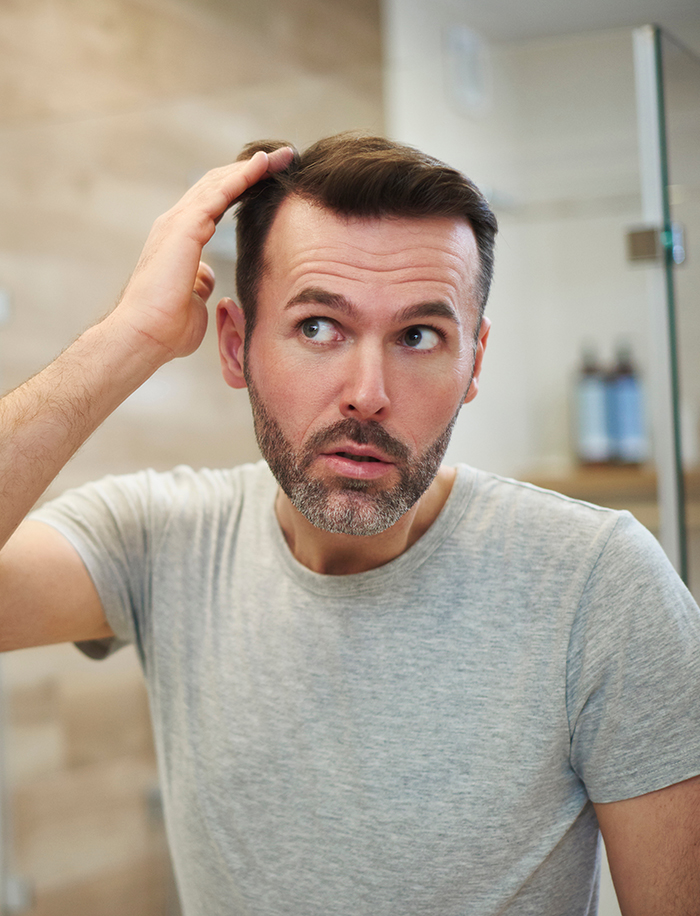
Hair loss often leads to low self-confidence, but hair loss medication for men has the potential to help slow the process, improve hair growth, and restore self-esteem. A hormone imbalance, a stage of life like andropause (a natural part of men’s aging when hormones decline), or a genetic inheritance can exacerbate men’s hair loss. In many cases, hair loss medication can help minimize thinning hair and help prevent future hair loss for men.
In addition to health concerns and genetics, such as male pattern baldness, men with nutritional deficiencies or even those experiencing a high level of stress may notice their hair is shedding during showers or falling out faster than normal.
At Belmar Pharmacy, hair loss medication for men comes in a variety of formulations and dosages that can be customized for individual needs.
GHK-Cu is a naturally occurring peptide that is thought to promote hair and skin vitality by stimulating collagen synthesis, enhancing tissue regeneration, and improving local blood flow.
Finasteride blocks the conversion of testosterone to DHT to help prevent hair thinning, while minoxidil increases scalp blood flow to stimulate resting follicles into active growth.
Finasteride lowers DHT by inhibiting the type II 5‑alpha reductase enzyme, reducing a hormone linked to hair thinning, while biotin supports the processing of fatty acids, glucose, and amino acids.
Estradiol is the strongest and most active of the three primary estrogens and may have a role in supporting menstrual, bone, cardiovascular, and overall cellular health.
Belmar Pharmacy offers bioidentical micronized progesterone compounds. This hormone is crucial during the reproductive years and can benefit perimenopausal and postmenopausal women particularly in areas of endometrial protection, sleep, and mood.
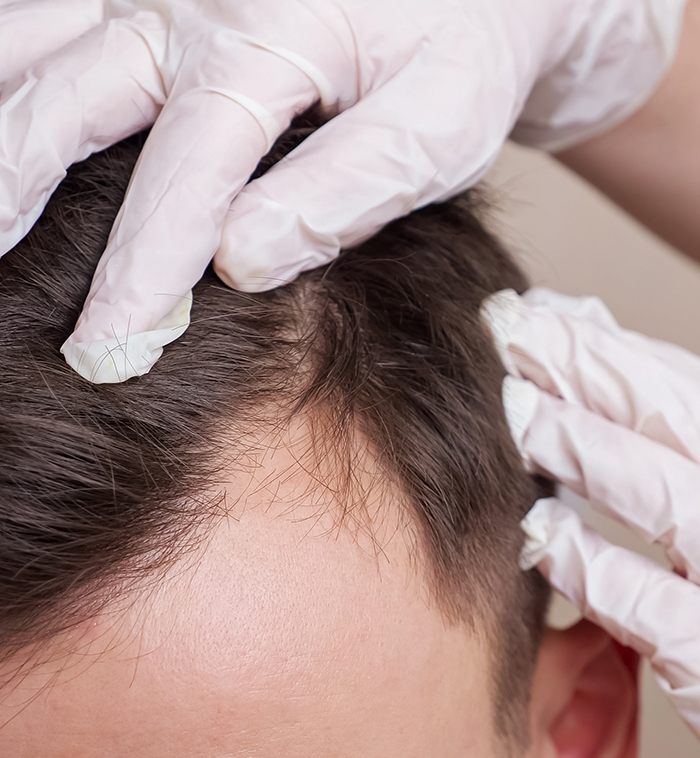
The most common cause of hair loss in men is heredity. As men age, it’s common to lose hair from the head, but it’s also possible to lose hair all over the body – a condition called alopecia universalis. Hormonal changes and medical conditions such as diabetes and lupus may also contribute to men’s hair loss. It’s also possible to experience temporary hair loss after a stressful period or traumatic life event, or prolonged poor nutrition.
The side effects of certain medications can also cause hair loss. Medications that cause hair loss often include those prescribed for depression, blood pressure, blood thinners, and high cholesterol. Some thyroid medications, and hormone medications may also cause thinning hair or temporary hair loss in men.
It’s normal to lose 50 to 100 hairs per day, as new hair is simultaneously growing and replacing the lost hairs. However, when new hair growth slows or is absent, balding becomes more evident. For many men, the combination of heredity and aging is enough to cause permanent hair loss.
The medical term for hair loss is alopecia. Diagnosis is based on a healthcare provider conducting a visual exam of the scalp and skin, discussing health history, current medications, and symptoms that might be indicative of hair loss in men. In some cases, a blood test may be necessary to evaluate vitamin and hormone levels to determine if they are contributing to a man’s hair loss.
Hair shaft disorders can be diagnosed through a light microscopy exam. If the healthcare provider suspects an infection is an underlying cause of hair loss, they may elect to biopsy the scalp, as well.
Belmar Pharmacy offers hair loss medication for men in a variety of dosage forms and strengths so providers can customize therapies for each patient’s individual needs and type of hair loss. Topical and oral medications for hair loss are available, and include:
Finasteride can block the conversion of testosterone to dihydrotestosterone (DHT), a potent androgen. High levels of DHT in the scalp and serum can be associated with hair thinning and loss.
As a vasodilator, Minoxidil may accelerate hair growth by awakening hair follicles from a resting state into a growth phase. When combined with other hair health agents like finasteride/dutasteride and tretinoin, it has the potential for greater impact.
Tretinoin may improve cell turnover and promote a healthy scalp. When formulated with minoxidil, it may help the minoxidil penetrate tissues more thoroughly.
Latanoprost appears to stimulate hair follicles, but the mechanism isn’t fully understood. The medication mimics natural prostaglandin, which has been known to modulate hair growth.
Ketoconazole is an antifungal that can address dandruff and dermatitis by attacking fungi and yeast growth on scalp tissue.
Biotin (vitamin B7) can support hair and nail growth as well as skin health. Combined with finasteride, distinct mechanisms of action work together to fight hair loss.
Each works in a unique way to help promote new hair growth and/or minimize hair loss. These hair loss medications can be combined to address multiple symptoms of men’s hair loss at once.
Some medications that are prescribed to address common health conditions, like high blood pressure, can cause hair loss in men. Most medication-related hair loss is temporary, but it is possible to experience more permanent hair loss from medications that trigger male pattern baldness. Medications that may contribute hair loss in men include:
Higher doses of vitamin A may also lead to men’s hair loss.
Several types of medical conditions may cause temporary or permanent hair loss in men. The natural decline in testosterone as men age (a life stage also known as andropause) can be an underlying reason for permanent hair loss and balding. Additionally, thyroid disorders and autoimmune diseases (although more common in women) can also contribute to men’s hair loss. Alopecia areata is an immune-related condition that can affect both men and women, which causes patchy hair loss and scalp infections.
Genetics are a major factor in men’s hair loss. Men can be genetically predisposed to a condition called androgenic alopecia, or male-pattern baldness. Male-pattern baldness is especially prominent in men where baldness runs in either their mother’s or father’s side of the family. This condition can be inherited from both, and typically leads to gradual, permanent hair loss. For many men, male-pattern baldness begins with a receding hairline from the forehead or on the back of the head, and becomes more pronounced with age and the natural loss of testosterone.
Other health conditions, such as prolonged periods of stress or traumatic events may cause temporary hair loss in men. Rapid, significant weight loss may also lead to men’s hair loss.